Lustre
Look for lively reflections and a sense of depth rather than a flat, chalky surface.


Finer pearl guide
Pearls are organic gemstones, so the right one is not simply the most uniform. Learn how lustre, surface, shape and proportion change the way a pearl looks and feels in jewellery.
The Finer approach
The beauty of a pearl is not measured by whether it looks completely uniform. Lustre, surface, shape and proportion work together, and the strongest pearl is the one whose character suits the finished piece.
For classic designs, that may mean bright reflections and a balanced round shape. For a more individual piece, an irregular baroque silhouette can be the reason the pearl feels special.
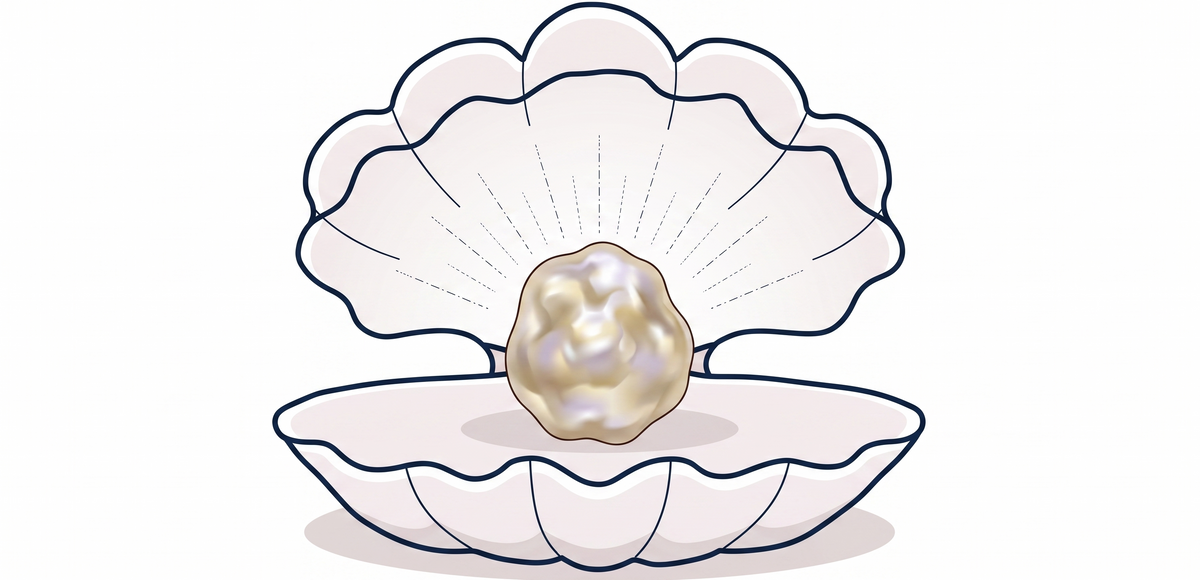
01 · Cultured pearls
Cultured pearls form after a pearl farmer introduces a nucleus or a small piece of mantle tissue into a mollusc. Over time, the mollusc deposits layers of nacre around it. Those layers create the depth and lustre that distinguish a genuine pearl from an imitation.
Because the process is organic, small differences in surface, colour and shape are normal. They are part of the material, not automatically flaws.
02 · Quality
There is no single number that captures pearl quality. Judge the pearl as a whole, then decide which characteristics matter most for the design you want.
Look for lively reflections and a sense of depth rather than a flat, chalky surface.
Natural marks can occur. Fewer or less noticeable blemishes generally create a cleaner appearance.
Round pearls feel classic and ordered. Baroque shapes trade symmetry for individuality and movement.
Size should suit the jewellery design, the wearer and the visual balance of any surrounding stones or metal.
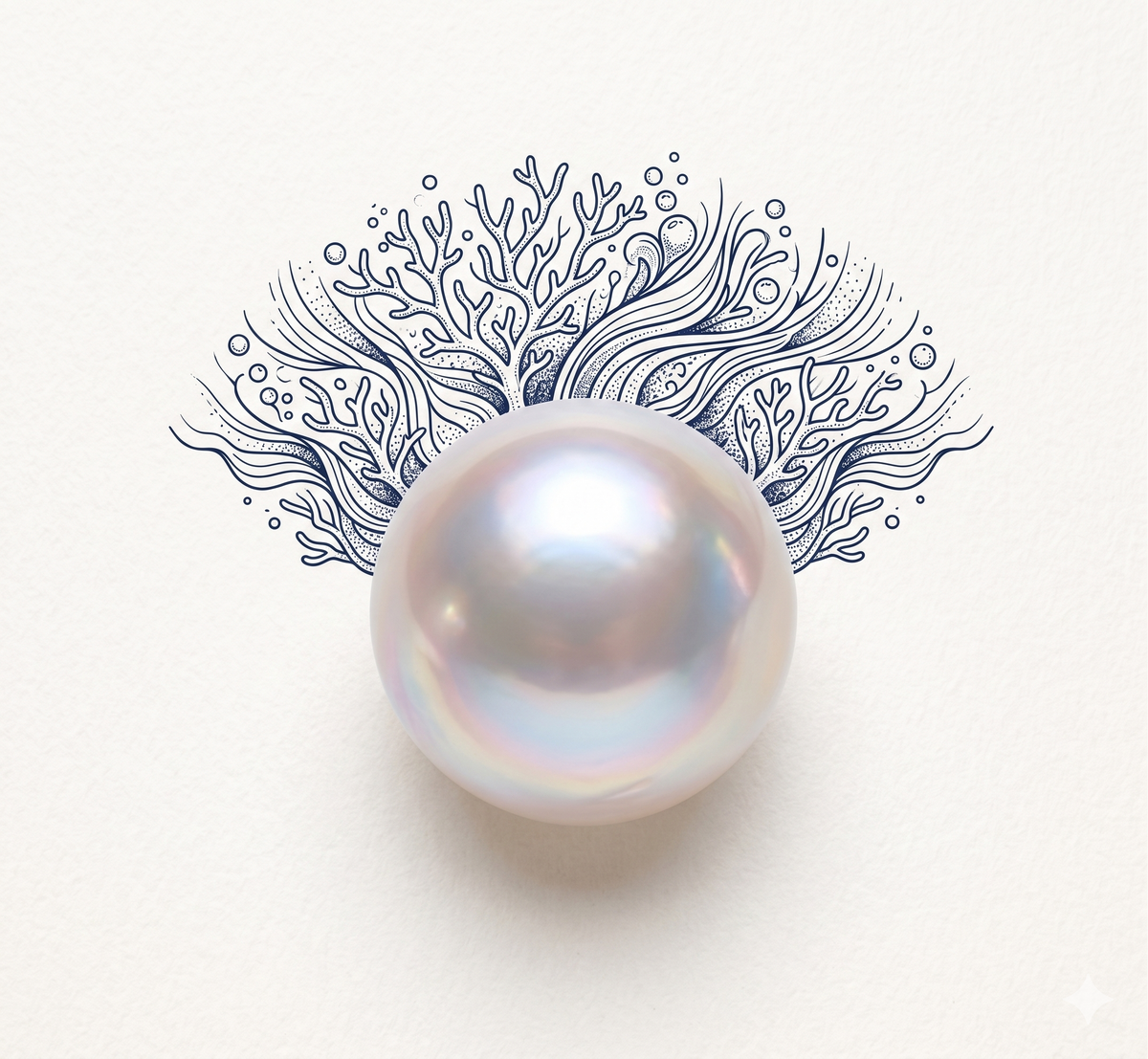
03 · South Sea baroque
South Sea pearls are known for their generous proportions and a softer, satiny lustre. In baroque form, their irregular outlines become part of the design rather than something to hide.
No two baroque pearls are exactly alike. Their asymmetry works particularly well when the jewellery is intended to feel sculptural, organic or genuinely one of a kind.
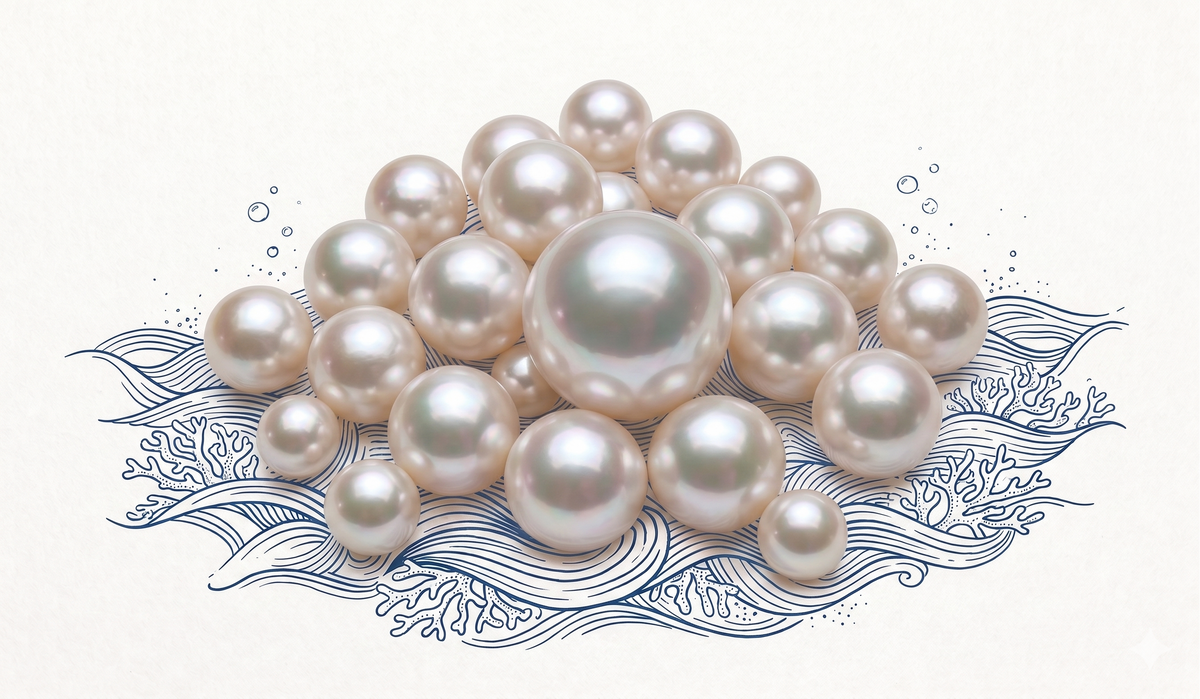
04 · Japanese Akoya
Japanese Akoya pearls are prized for their bright, crisp lustre and traditionally round appearance. Their more refined scale gives them a lighter, more precise look than larger South Sea pearls.
They are a natural fit for classic strands, stud earrings and understated fine jewellery where reflection and symmetry matter more than dramatic size.
05 · Care
Put pearls on last. Avoid direct contact with perfume, hairspray, cosmetics and household chemicals where possible.
Wipe after wear. A soft, slightly damp cloth is usually enough to remove skin oils and surface residue before storage.
Store separately. Pearls are softer than many gemstones and metals, so keep them away from harder jewellery that can scratch the surface.
Find your pearl

Join our list for new designs, private offers and $100 off your next order.
Use the code below to get 100AUD off your first order.
Code copied successfully!
[title]
[message]Love it? Add to your wishlist
Your favorites, all in one place. Shop quickly and easily with the wishlist feature!